
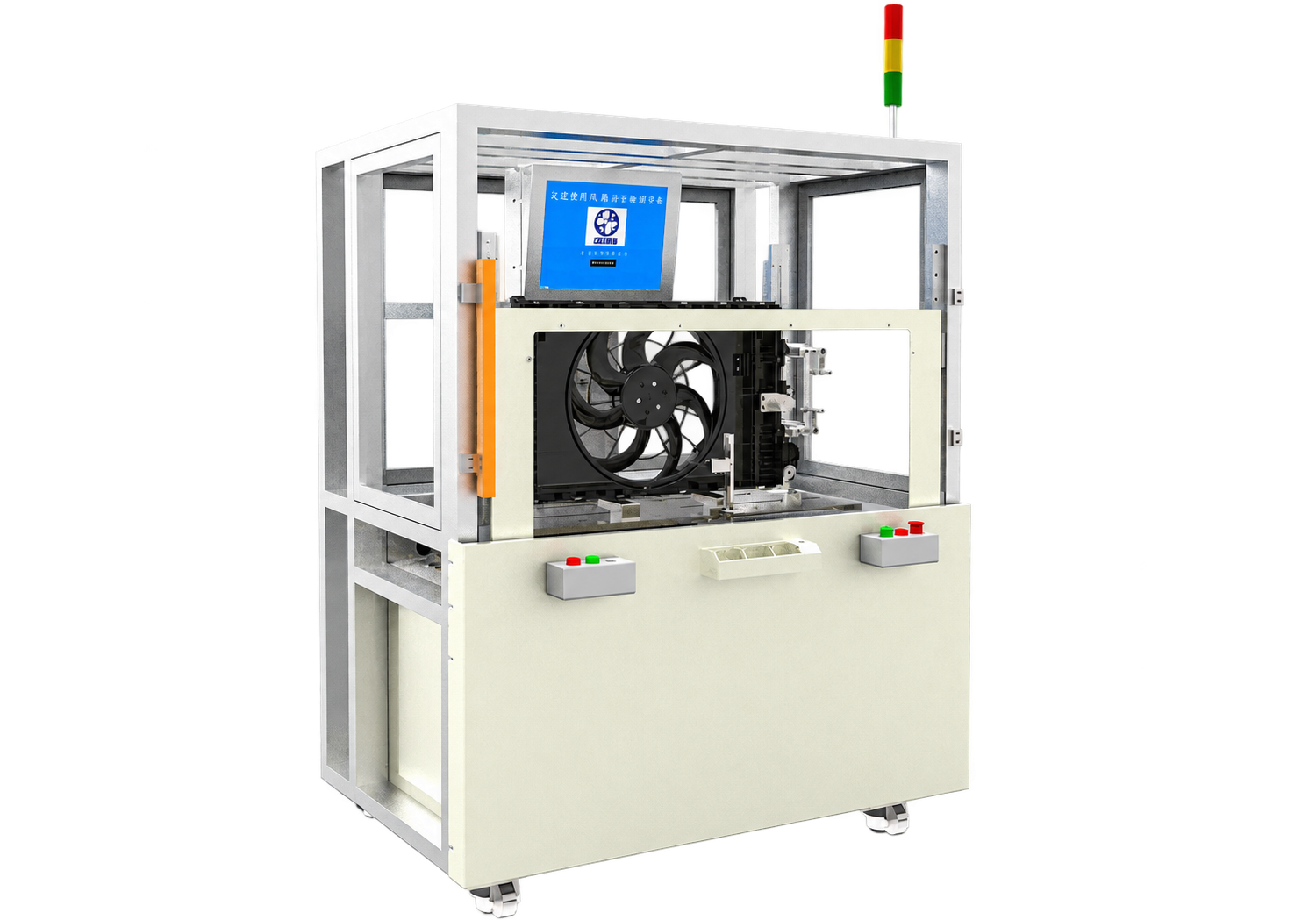
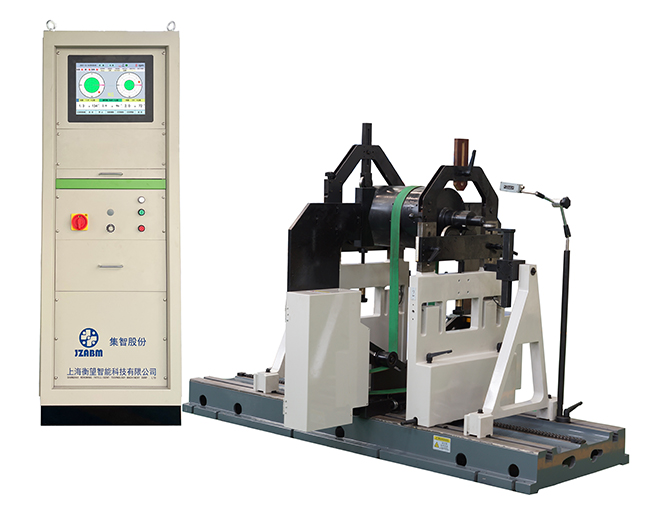
In previous article, we talked about the difference between static balancing and dynamic balancing. Here comes a new problem: how to choose between static balancing machine and dynamic balancing machine?
According to GB9239 criterion, for rigid rotor, If the supporting distance of the plate shaped rotor is large enough and the axial jitter of the plate position is very small when rotating, static balancing, which is also known as one plane balancing is required, otherwise dynamic balancing, know as two-plane balancing is required.
1. How to tell a rotor as a plate shaped or not?
It is determined by the ratio of the diameter“D” of the rotor to the distance between the two correction planes “b” of the rotor. When D/b<6, static balancing would be required, and when D/b≥6, dynamic balancing is required. While it is not absolute, since rotor working speed should also be taken into consideration.
2. Distance between two supporting points
When the ration of distance between two supporting points “L” to the distance between the two correction planes “b” is high enough, ≥5, static balancing is usually required.
3. The following cases are only for static balancing:
A. For the rotor of single-stage pump and two-stage pump, when the working speed is less than 1800 rpm, no matter D/b < 6 or D/b ≥ 6, only static balance can be done
B. For the rotor of single-stage pump and two-stage pump, when the working speed is ≥ 1800 rpm, if D/b≥6, only static balance can be done. However, the remaining unbalance after balancing should be less than or equal to 1/2 of the allowable unbalance. If it is stipulated to do dynamic balancing, it needs to see whether the two more correction planes can be separated on the balancing machine. If they cannot be separated, only static balancing can be done.
C. For some rotors such as open wind rotors, if the support on both sides cannot be maintained, only static balance can be done.